Winter is upon us and it is a snowy day in mid-January, but I can still hear in my mind the roar of leaf blowers that were buzzing as recently as last month. Using leaf blowers and removing leaves in our yards may seem like a good idea, but there are many reasons to rethink this.
According to the Centers for Disease Control and Prevention, using a commercial, gas-powered leaf blower for two hours is not good for your hearing. Some leaf blowers can be as loud as 80 to 85 decibels and many cheap or mid-range blowers can reach 112 decibels. This level can cause hearing loss in a short time. A plane taking off generates an average of 105 decibels. In one 2017 study by the Harvard T. H. Chan School of Public Health, a conventional leaf blower is louder than the 55 decibel limit considered safe half a mile away (at 2,400 feet, or 800 meters).

The particulate matter that a leaf blower’s two-cycle engine creates is also a health issue. These fine particles can penetrate deep into the lungs. Toxic compounds that leak into the air from unburned fuel are carcinogenic and known irritants to the eyes, skin, and respiratory tract. Gasoline-powered, two-stroke engines produce significant amounts of volatile organic compounds, carbon monoxide, and nitrogen oxide that worsen air quality. Motorized garden equipment is responsible for up to 5% of the air pollution in the United States.
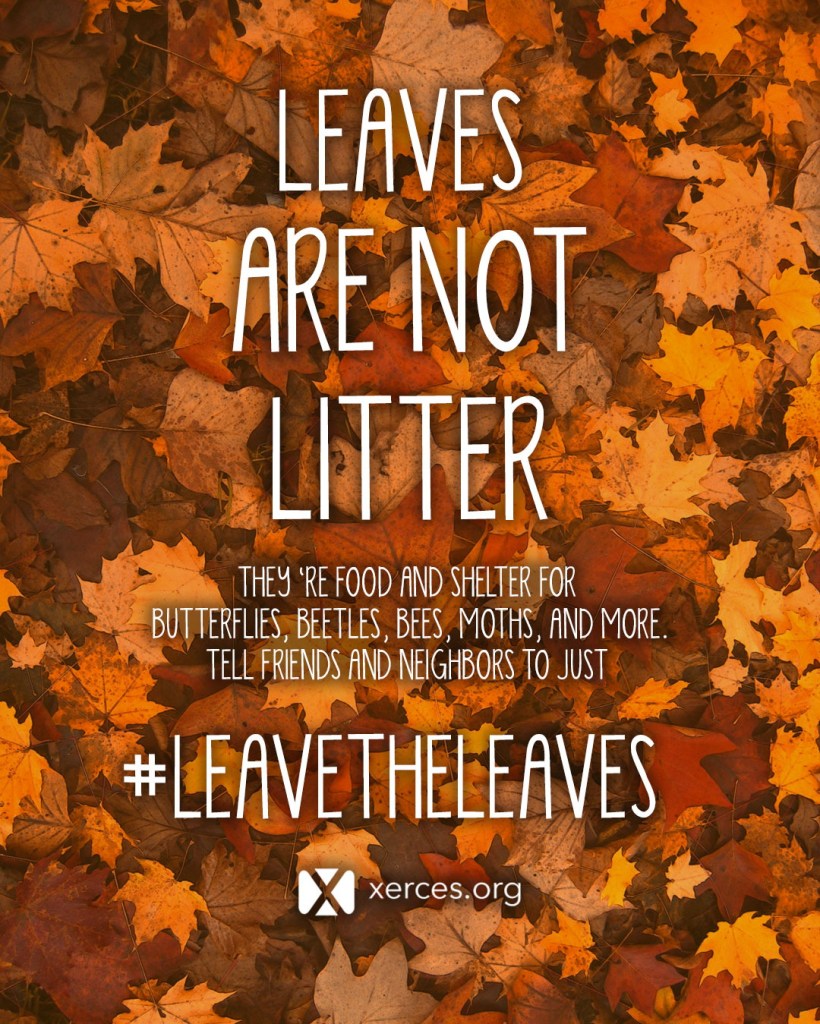
I like the Xerces Society for Invertebrate Conservation’s slogan—“leaves are not litter.” The typical homeowner bags or brings leaves to the curb every fall. Beyond the human health implications of using leaf blowers and removing leaves from our yards, there is another standard we should think about: for millions of years leaves have fallen from trees and shrubs and onto the ground, recycling nutrients back into the soil and nourishing the plants below. Leaving dead leaves makes sense.
You may notice wiry, white “webs” underneath leaves left on the ground. These are mycelium, fungi that break down leaves into usable nutrients and help create a rich soil full of life that is so essential for plants. Bacteria are really important decomposers too. Spring woodland wildflowers like Bloodroot (Sanguinaria canadensis) and Trout Lily (Erythronium americanum) depend on these fungal relationships in decomposing leaves.

It’s not just plants that depend on dead leaves. Leaves are a vital habitat for many insects. They spend the winter there insulated from the weather, plunging temperatures, and howling winds. Bumblebee colonies die in winter, but the new queen hibernates under leaves. She emerges in early spring to lay eggs and begin a new colony. Wonder why you don’t see as many fireflies in your yard as you used to? Along with loss of meadow habitat, it is because adult fireflies spend the winter under leaves.

Many butterflies and moths overwinter as an egg, larva, chrysalis, or cocoon. The Great Spangled Fritillary Butterfly (Speyeria cybele) and the Isabella Tiger Moth (Pyrrharctia isabella) spend the winter under leaves as caterpillars. You might know the Isabella Tiger Moth caterpillar as the woolly bear.
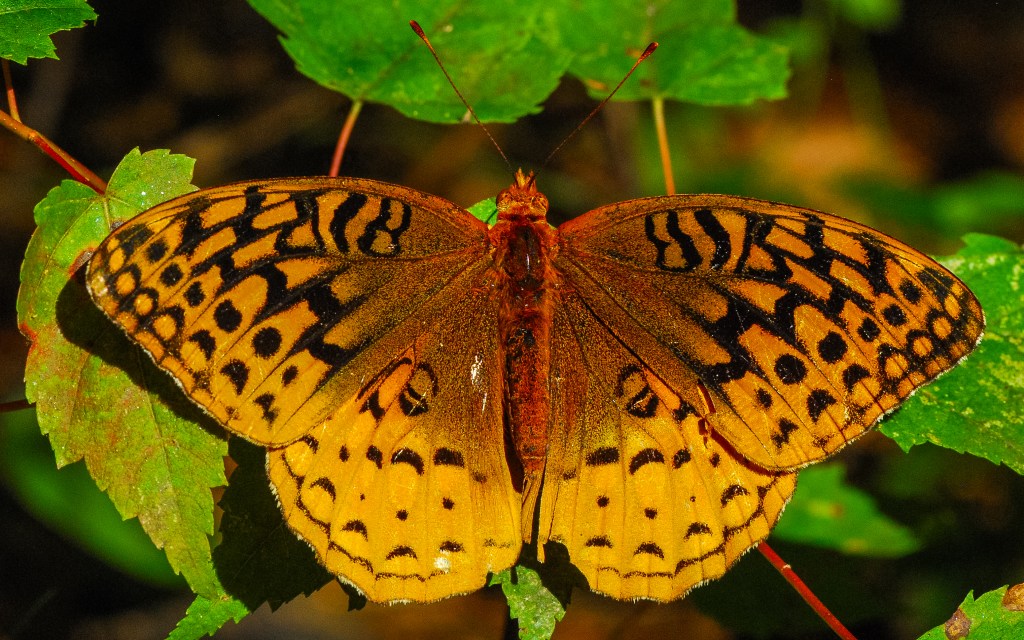
The Red-banded Hairstreak (Calycopis cecrops) spends the winter as eggs attached to fallen oak leaves. When temperatures warm in the spring, the eggs hatch and the young caterpillars feed on those leaves. The Luna Moth (Actias luna) and Black Swallowtail Butterfly (Papilio polyxenes) spend the winter as cocoons and chrysalises. They are very cryptic—they look like dead leaves—to keep from being eaten by predators. Raking up whole leaves into a mulch pile will ensure that these insects stay safe and emerge in the spring, as well as create a wonderful mulch for your plants.

A thin layer of leaves on your grass can help your lawn, but too much can kill it. Better to rake them under trees and shrubs and into garden beds. Be careful not to put leaves against the crowns of the plants.
For next year’s fall cleanup consider not only making your yard tidy, but resplendent with the many tiny lives with which we share the planet.
 Beyond Your Back Door
Hi Jim, This article was a great read, with excellent visuals! Thank you. Would it be ok for me to copy and post this article to our local Lyme Pollinator Pathway email list? One of our roles is to help educate the public about general pollinators issues, and to give them concrete ways to improve their own property biosphere/habitat. Let me know, as I don’t want to assume I can redistribute your blog entry. All the best, Diana (Fiske) p.s. I ran a workshop on Fishers Island last weekend starting native seeds I had collected from my garden in milk jugs. Everyone was so enthusiastic, though I told them this project takes some patience! haha… My first year following your lead I had NO seedlings. Eek! But in the past two years, it’s been so great. I even sold a bunch of little native plants to benefit our church at their Fall Fair. Bingo! And I just put out 14 of my own milk jugs full of native seeds here in Lyme. I’m a true convert. Thank you for your support over the years.
>
LikeLike
Thank you for this piece, Jim. You put all in one place the many reasons to “leave the leaves”!
LikeLike
Thx so much Diane! All best, Jim
LikeLike
Thank you for this article. It was good to get a new post. I am curious, is there an optimum time to rake and remove leaves? If we do not get to it until December are we harming life? Even if we are simply raking leaves and dumping elsewhere in the yard or woods? If leaves are dumped on a vegetable garden, when can it be tilled? When to clean flower bed? We have similar questions about No Mow May. Are we disturbing life when we mow in June? That might be for a Spring post. Thank you. Claire
LikeLike