Just missed it! I was hoping to take a photo of a queen bumblebee gathering pollen on the wildflower Dutchman’s Breeches (Dicentra cucullaria). As I looked away for one moment, the bee flew onto the plant two feet in front of me and flew off just as I saw it. I have heard that these flowers are an important early nectar source for queen bumblebees, who need to gather pollen for their new broods. I look forward every spring to seeing these wildflowers and their pollinating insects again, but there aren’t as many of either as there used to be.
Wildflowers such as Dutchman’s Breeches are called spring ephemerals. They emerge through the leaf litter here in Connecticut in March and April to take advantage of the short window of spring sunlight and flowering before leaves in the tree canopy above grow to shade them out. By summer, you would never know that they had been here.

The flowers of Dutchman’s Breeches look like upside-down pantaloons, hence the name. Walking along the nearby Farmington Canal Greenway this week, I came upon a nice patch in full bloom. It’s amazing to me how many people walked or rode by and didn’t look down and see them. Two researchers in 1998 called this “plant blindness,” for our inability to notice plants in our environment, which has consequences for conservation and human health.

The Trout Lily (Erythronium americanum) is another ephemeral found in the eastern United States. Also called Fawn Lily, its leaves resemble a speckled brook trout, or a fawn’s mottled fur. Another name is Dogtooth Violet for its pointed bulbs, although the plant is a member of the lily family and is not a true violet. Look for paired leaves because those will be the plants that will flower. It can take up to seven years for Trout Lily to flower, and only about half a percent of the plants in a patch will do so. Some patches, though can be up to 300 years old!
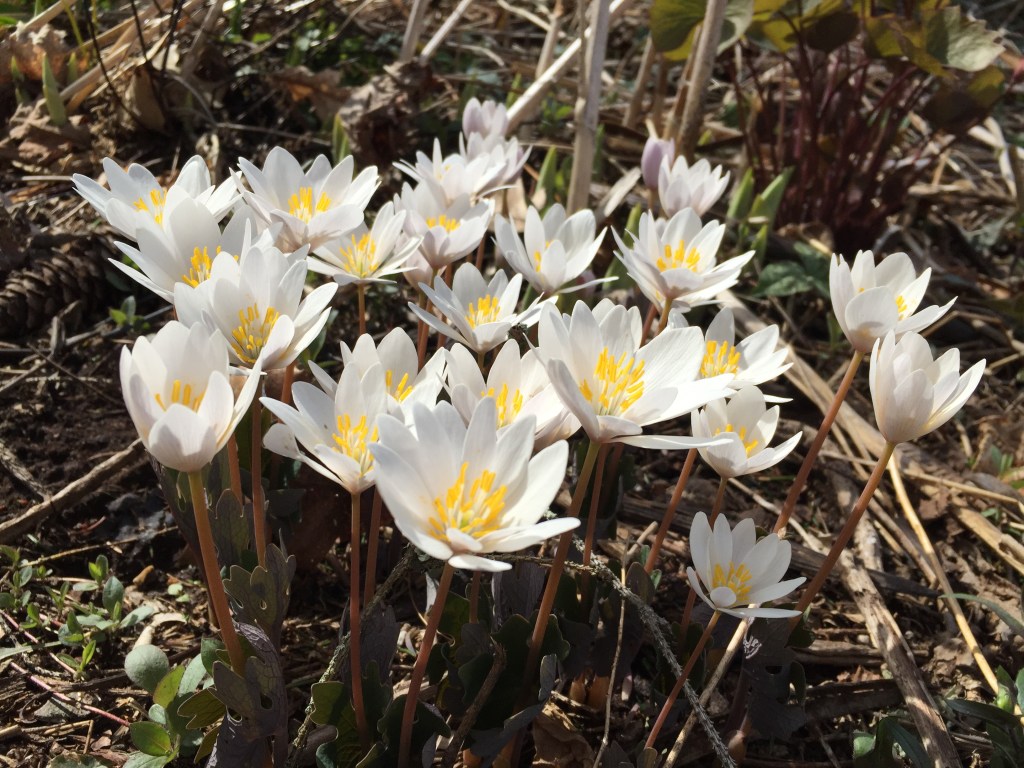
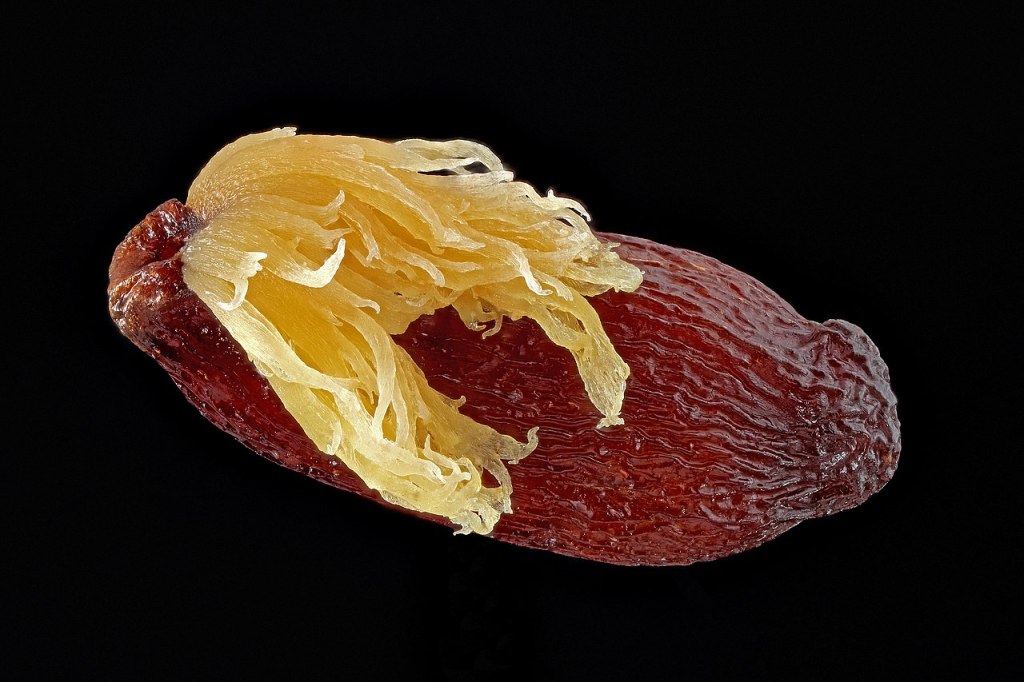
Blood Root (Sanguinaria canadensis) isn’t a true ephemeral. Its leaves often don’t die back quickly, but it’s flowers last only a few days. However, the plant shares its seed dispersal strategy with many ephemerals. Blood Root, Trout Lily, and Dutchman’s Breeches all develop elaiosomes, fleshy structures full of lipids that are attached to seeds. Ants are attracted to these fatty structures and take them underground to their colony to feed on them. The seeds are then deposited in their subterranean waste pile, where they are fertilized and grow. This strategy is called myrmecochory. Blood Root gets its name from its scarlet sap, once used as a dye by Eastern Woodlands peoples.
How important are plant–pollinator relationships! Many of our insect pollinators, so critical for our own survival, are also vital for our spring flora. Among these are small solitary bees in the genus Andrena. There are specialist bees that are dependent on certain plants and the plants on them. The Trout Lily Bee (Andrena erythronii) only gathers pollen from the Trout Lily and the bee Andrena erigeniae only visits the flowers of Spring Beauty (Claytonia virginica).

Unfortunately, many native wildflower species are decreasing, and with them their specialist pollinators. Habitat fragmentation plays a big part in this. But increasingly significant are the introduced, invasive plants that are taking over. On a recent walk, I found a few patches of Blood Root completely surrounded by thousands of Garlic Mustard (Allaria petiolata) seedlings. Garlic Mustard not only can choke out our native plants, but research has shown that this invasive has allelopathic chemicals that can kill important soil fungi, preventing many plants from growing near it. Each Garlic Mustard plant can produce more than 5,000 seeds that can remain viable in the soil for five years or more.

I see more Mugwort (Artemesia vulgaris) and Japanese Knotweed (Fallopia japonica) around too. These introduced plants do not contribute to our local ecosystems. They don’t have insects who co-evolved with them to eat their leaves or who are specialists to rely on their nectar and pollen and they can choke out native plants. As entomologist Doug Tallamy observes, “this is a growing problem for humanity because it is the plants and animals around us that produce the life support we all depend on. Every time a species is lost from an ecosystem, that ecosystem is less able to support us.” So, one way for you and your family to exercise during COVID-19 social distancing and help the environment is by removing these plants from your yard or neighborhood and putting them in the trash. Garlic Mustard’s mature, second year plants can be hand-pulled fairly easily.

You can add many of these spring ephemerals to your garden after removing invasive plants. But please don’t dig them from the wild. Many local nurseries are now carrying these wildflowers, but be sure to ask whether the plants are nursery propagated. Plant them in a soil enriched with compost where they will receive light shade and part sun in the summer. Make sure they don’t dry out in the spring. You only need add a thin layer of ground-up leaves (your mower works well for this) in the spring or fall. The bees will thank you.


 Beyond Your Back Door